Apple successfully has a monopoly on solving your iPhone. There’s now a fight to change that.


Last month, a customer delivered her 2018 MacBook Air to West Seattle Computers. She had spilled water on it. Technicians took the gadget aside, isolated the damaged part, and discovered a probably easy repair: a power port. The trouble turned into finding a substitute. “We can’t get parts without delay from Apple,” says owner Eric Tishkoff, explaining that the organization refuses to sell to independent shops like his. He couldn’t discover a new one everywhere else. “We simply had to hand return the device and say I’m certainly sorry.”
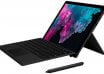
Tishkoff thinks he could have repaired a couple of hundred bucks. Apple, he anticipated, might rate anywhere from about $800 to $1200. The patron agreed and determined to be patient if the component surfaces at the secondary market down the road. In the meantime, she offered a modern-day computer from Apple. Shops and clients throughout the USA face similar problems each day, and not simply with Apple products. Microsoft’s Surface devices are glued so tightly that “you have to break it” to restore it, says one technician, which makes upkeep highly-priced. Asus is another computer maker that refuses to promote elements, says Tishkoff. (Asus did not respond to more than one request to remark.) He added that some producers even make it hard to discover the manuals essential to make a restore.
When it comes to permitting 1/3-birthday celebration upkeep, producers “don’t have the economic incentive,” he says. “The gadget encourages human beings to throw [electronics] away and replace them.” But pushback has been unexpectedly growing. Advocates for the “right to restore” are seeking to pressure producers to make their merchandise more repairable and improve third-party access to crucial equipment, elements, and data. Even farmers are ccompetingJohn Deere for the potential to restore tractors. “As humans discover they’re certainly getting screwed, they get mad,” said Gay Gordon-Byrne, the executive director of the Repair Association, which is helping to spearhead the rush. “We’ve been growing without a doubt strongly.” During these 12 months, proper repair payments were introduced in a report of 20 states. This state-level method, Gordon-Byrne says, is drawn from an earlier war that independent automobile stores waged against automobile businesses — and gained.
Turning off the check engine light
Barry Steinberg owns Direct Tire and Auto Repair, a series of 4 car shops dotted throughout Massachusetts. The Nineties, he says, saw a sea trade for mechanics. As motors became increasingly more complex and automatic, manufacturers stopped giving them the information or gear they needed to make fixes. He recollects one repair manual that got here with pages intentionally removed. Companies were also making automobile computer systems hard to engage with, to the point that he couldn’t replace even minor elements, along with window switches. Perhaps the most difficult trouble, though, turned into a mild test engine.
“I couldn’t diagnose the check engine light,” he stated, or flip it off after a repair. “They weren’t truly giving us all of the records. We had been in a precarious position because we couldn’t repair your vehicle.” For decades, customers who had been with Steinberg’s circle of relatives have been forced to go to a supplier, where appointments may be scarce and costs appreciably higher. By the early 2000s, independent stores like Steinberg’s had been demanding their “right to restore.” After legislative efforts stalled on the federal level, the fight came to a head in Massachusetts. Steinberg and his colleagues testified to the kingdom legislators. Even a number of the NPR display Car Talk — who operated an independent station for years — pitched in to sell the bill.


How to assess computers that don’t pretty exist
To gauge the performance of a supercomputer, laptop scientists turn to a widespread device…

Microsoft co-founders Bill Gates and Paul Allen got ‘busted’ in high faculty for exploiting a trojan horse inside the laptop device
Microsoft co-founders Bill Gates and Paul Allen first met as young adults in the …